
Publications
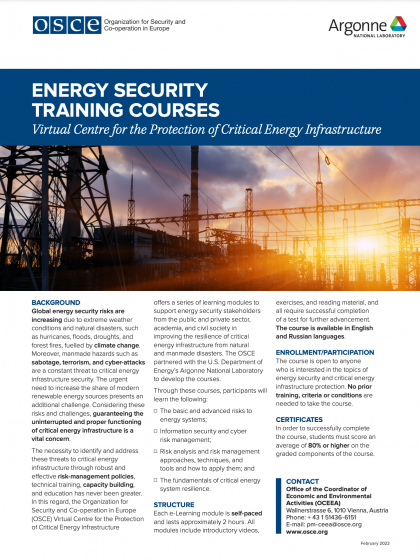
Energy Security Training Courses: Virtual Centre for the Protection of Critical Energy Infrastructure
Publishing date: 21 April 2022
The OSCE-Argonne National Laboratory’s e-learning course on the Protection of Critical Energy Infrastructure support energy security stakeholders from the public and private sector, academia, and civil society in improving the resilience of critical energy infrastructure from natural and manmade disasters. The course is free and open to everyone and is available in English and Russian on the OSCE E-learning Platform: https://bit.ly/3Jpp1OZ
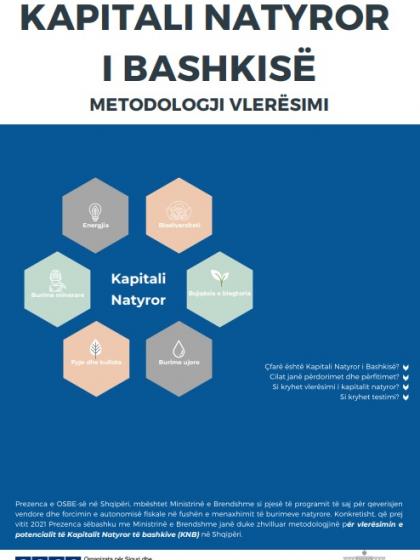
Illustrated Infographics on Municipal Natural Capital
Publishing date: 20 April 2022
This illustrated infographics is being published as part of the programme for local government and strengthening fiscal autonomy in the area of natural resources' management. Since 2021, the OSCE Presence in Albania together with the Ministry of Interior are developing the methodology for the assessment of the potential of the Municipal Natural Capital (MNC) in Albania.
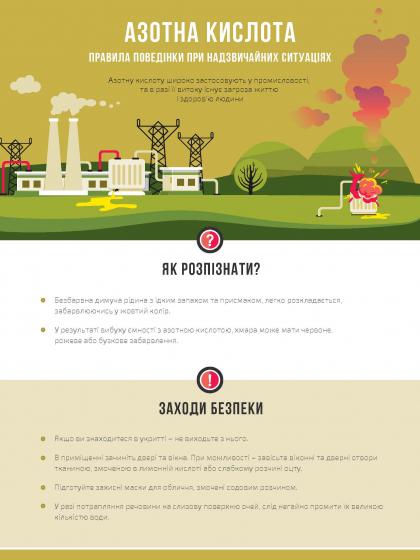
Nitric Acid. Safety Rules in Emergencies
Publishing date: 20 April 2022
Collections: Chemical Threats: Safety Basics - Print Materials
Nitric acid is one of the most important products of the chemical industry. It is produced in very large quantities and is widely used both in non-ferrous metallurgy and for the production of nitrogen fertilizers, plastics, organic dyes and medicinal substances. In the case of uncontrolled release, the substance poses a major threat to human health and life.
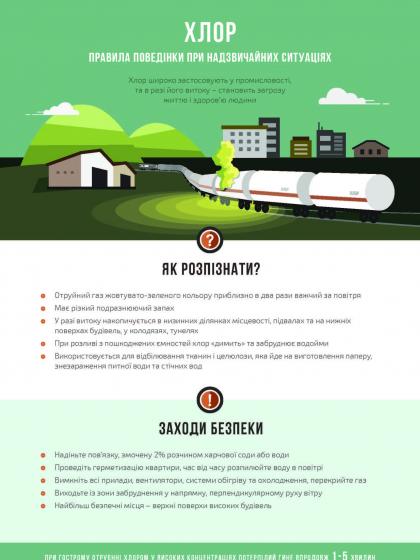
Chlorine. Safety Rules in Emergencies
Publishing date: 15 April 2022
Collections: Chemical Threats: Safety Basics - Print Materials
Modern industry and utilities use chlorine extensively, notably as disinfectant, but also in production of paints and pharmaceuticals. In case of a spillage, it poses a significant threat to human health and life.
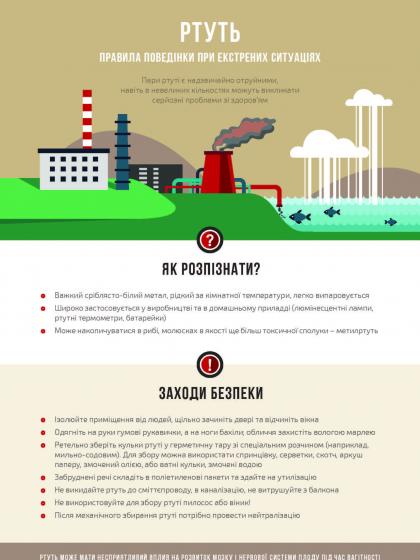
Mercury. Safety Rules in Emergencies
Publishing date: 15 April 2022
Collections: Chemical Threats: Safety Basics - Print Materials
Mercury is widely used in medicine, electrical appliances and metallurgy. However, mercury vapor is extremely harmful to all life forms.
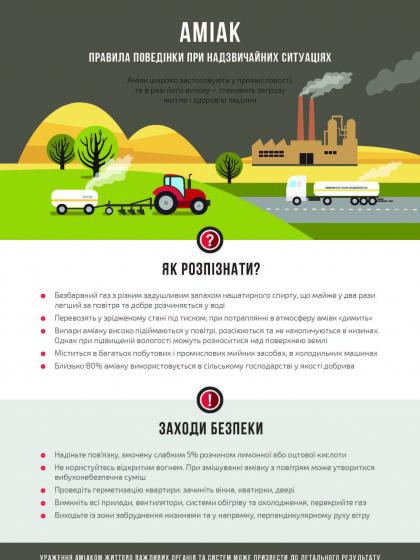
Ammonia. Safety Rules in Emergencies
Publishing date: 15 April 2022
Collections: Chemical Threats: Safety Basics - Print Materials
Ammonia is one of the most frequently used agents in the modern chemical industry, it can be used to produce fertilizers, but also you can find it in facilities where there’s a need to store significant amounts of refrigerated food. In case of a spillage, it poses a significant threat to human health and life.
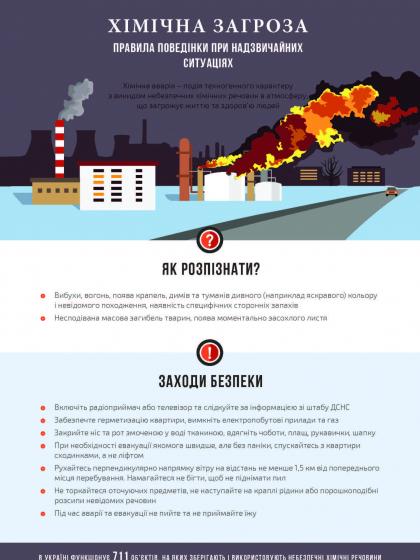
Chemical Incidents. Leaflet on Risks and Safety Measures
Publishing date: 15 April 2022
Collections: Chemical Threats: Safety Basics - Print Materials
The concept of countering chemical threats is highly relevant for Ukraine, which has a large number of high-risk chemical facilities. Potential risks are significantly higher today, when plants, enterprises and storehouses can be targeted or even accidentally damaged during hostilities. A resulting spillage (release) of hazardous chemicals poses a threat to human health, life, and to the environment. This leaflet produced by the OSCE projects in Ukraine provides a number of practical tips that will help civilians to recognize chemical threat, take safety measures and provide first aid in case of poisoning.
Hate Crime Victim Support: Policy Brief
Publishing date: 22 April 2022
Hate Crime Victim Support: Policy Brief Hate Crime Victim Support: Policy Brief This policy brief condenses the knowledge and key findings of the Enhancing Stakeholder Awareness and Resources for Hate Crime Victim Support (EStAR) project implemented by the OSCE Office for Democratic Institutions
Sexual extortion as an act of corruption: Legal and institutional response
Publishing date: 19 April 2022
This analytical report presents findings from the conducted comparative analysis of the existing national legislation, international legal framework and semi-structured interviews and focus groups. Recommendations contained in this report pertain to regulation of sexual extortion as a form of corruption in the Criminal Code, Law on Prevention of Corruption and Conflict of Interests and in the Law on Prevention and Protection of Women from Violence and Domestic Violence. Incrimination of sexual extortion in the national legislation would make North Macedonia among the few countries in the OSCE region to have legislatively recognized and institutionalized gendered forms of corruption, leading to reducing its impact on women.
Democracy and Human Rights in the OSCE: The ODIHR Annual Report 2021
Publishing date: 23 March 2022
Collections: ODIHR Annual Reports